Thursday, March 20, 2014

Ocean wonders - Ilha Bela


Image credit: fotos.fot.br

As I mentioned on Tuesday's blog on Ilha Bela, when we were pulling into the boat ramp under low power, a large sea turtle popped up its head next to us. A photo could never convey how gorgeous it was (and it's a good thing too because I didn't get my camera out in time). He quickly tucked his head back under the water and glided onwards. I almost fell out of my seat trying to watch it, while the two long-time residents of Ilha Bela with me looked on.

I said to them "ah, you must see them every day" and they answered "yes, we do and many of them." Then Marcelo said "but, you know what? It never gets boring."  And that's how I would feel, I think. I certainly can't visit any town that has a unit of Projeto Tamar without stopping in. But I get ahead of myself.

For those of you who know little about the sea turtles, they are migratory animals. They don't have established homes and are known as sea travelers. Only when it is time to lay eggs do they return to the beach where they themselves were born. Yep, the very beach. They bury the eggs in holes in the sand. 

For a beautiful video on the egg-laying and eventual run for the sea, look here.

Here in São Paulo state, the egg laying time is from September-March. As in, now. Maybe the turtle I saw was coming back from egg laying though that coincidence would be a little unlikely, no? I just read that of 1000 turtles which are born, only 1-2 reach adulthood. Those odds are not good. It takes 30 years for them to become adults, when they become anywhere between 65 and 750 kilos (140-1,600 pounds).  Source for all this here. 

Ubatuba is near Ilha Bela (in fact I think you can see IB on the map!)

The Brazilian organization that works to preserve sea turtles is called Projeto Tamar. I am not sure exactly what Tamar means but it rhymes with "Amar" or "love" which is appropriate. With 19 bases now in Brazil, this organization (supported by Petrobras the state-owned oil company) does research, educates and rescues sea turtles. While I find the support of Petrobras somewhat ironic, frankly we have to get the money somewhere and Brazil is not known for charitability.  However, I'm guessing there are not too many studies being done on the effects of the pre-sal or new oil reserves on the survival of turtles. 

One of the studies that IS currently being done and is available online is about the effect of light pollution on newly-born turtles. And it's just what you would expect: the little turtles get disoriented by the light, thinking it is on the horizon, and die as they cannot get out to sea. Now, as you may have read yesterday, the port of São Sebastião is planning to grow 30 times in capacity...and I'm guessing part of that will be lots and lots of lights as the ships dock even at night to unload containers. A little killing ground for turtles. Or so I imagine.

The biggest killer of sea turtles, according to Projeto Tamar, is being caught in fishing nets. Not sure if that will change. I might have to pay a little visit to the local Projeto Tamar, in Ubatuba, and ask some questions. For more info, see Projeto Tamar. Their site is available in English.

In the meantime, I say to you little turtles, run, run, run and swim swim swim...away from the light!

Wednesday, March 19, 2014

Crying for You - São Sebastião and Ilha Bela


This is a diagram of what the new port of São Sebastião will look like. What exists today is in brown--the happy bright colors are where cars will be parked waiting for import/export (green) and diesel storage and various other operations areas (orange). Ilha Bela, the subject of my last two days is approximately where this sentence lies. Between the two lies an unfortunately-deep channel which simply entices the shipping industry.

The environment watchdog, IBAMA, has approved the project as of December 2013. It is a port with 30 times its current capacity. Container ships will unload in piles of five or six vertical blocks, effectively blocking the port and the coastline from the sight line of many in Ilha Bela. Including the downtown. Where our friends live is far enough from the port that it should not be affected terribly by the ugly--but in the number of ships that pass--yes.

One ghostly cruise ship...okay...

One parked oil tanker--ugly but okay...30 times this: not okay
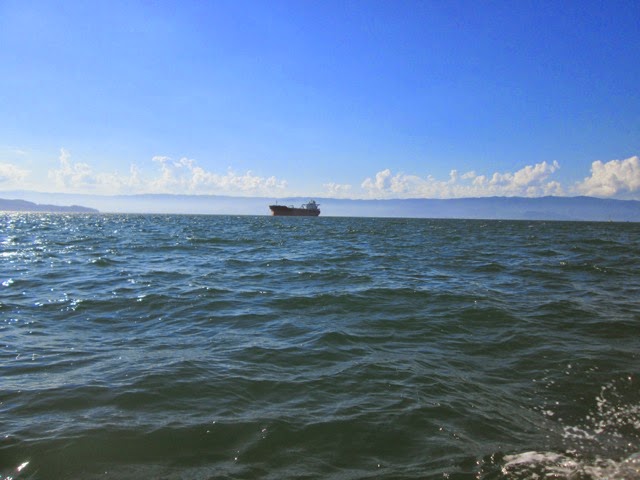
During our recent visit, we saw only one huge oil tanker and one passing cruise ship in our view. Imagine thirty times this number. And of course this will also affect my other secret paradise--the beach community of Guaecá.  The project, if approved, will cover two-thirds of the Mangue do Araçá ecological sanctuary. Covered with concrete! Three of the beaches that are covered are major fonts of crustaceans and mollusks.  See more here including a pretty nice video.

How can this all be legal? I don't know--but for sure the government is showing how many jobs will be created in a region where 33% of the population live in slums and 50% don't have access to basic sanitation. Are we spending our tax money in the right place?

I don't know the answer to all this but you can find more information here. In Portuguese. 

This is how I want to see the channel from Ilha Bela. Putt-putts and windsurfers. Yeah, I'm a Luddite


 I cry for you, Ilha Bela. 

Tuesday, March 18, 2014

Brisa - Ilha Bela

Evening view from the deck (facing Caraguatatuba)

Today's post is a continuation of yesterday's ramble on about Ilha Bela, quite possibly the most beautiful island in the world (bring on the hate mail from Hawaii and most of the Philippines).  As I mentioned yesterday, we were hosted by cool friends who know how to waterski and sail, and paddleboard and windsurf.  This means that our first day had to include water sports.

One of our host's friends--in fact a childhood friend who learned to sail with our host-- brought around their shared boat in the morning. This motor boat is named "Pedrinhas" or little rocks (not sure why, must ask) and is one of those giant inflatables with a canvas roof and just enough comfort (a cooler with cold drinks) to make it tons of fun. The idea was to teach my kids to waterski.

In order to lay the groundwork, the hosts each sent out their kids to ski. All the kids are around age 6-7, and the two who went first have gone skiing multiple times. I was wondering how they were going to get my kids up on two skis at this age...but then I met the toboggan. My word for it.

The toboggan was a board about 1 1/2 foot wide by 3 foot long. It looked like a flat board with several handholds on it. At the front of the board there was a small pole for the kids to hold on to, instead of being pulled directly by the boat. The toboggan was attached by another cord to the boat. It's best to show it like this (sorry I cut off my kid's head, but you know my addiction to my kids' photo privacy):


It is something so simple, so old style and so wonderful for the kids to learn. Look at how stable my son's legs are! And the long board allowed the father of the learning kids (one kid is just 5 years old) to surf along behind. More than anything, the father on the board was psychological not physical support. My son quickly got rid of BH so he could surf by himself. First time, and he was up.  L-O-V-E Brazil for this stuff. And also many thanks to our host who had an endless wealth of patience, encouragement and applause for my boys.

Our host on a first run with the smallest kid

In the end, one of my sons was too scared to go. Not of the waterskiing part, really, but being alone behind the boat. What if he fell off in the middle of the channel? Would we come back from him? Reason was not playing into his evaluation and so we let him not go.  Then we all jumped in the water ourselves and bobbed around near some beautiful rocks:

 
When we pulled the boat back into the small boat ramp, a huge sea turtle bobbed up next to us. It must have been 2 feet long. I was so surprised I didn't have my camera in hand.  

Our host and his friend went off for a paddleboard while we went up for some cold drinks and a dip in the pool. And that is pretty much all we did that afternoon. And that evening (plus an exhausting, haha, barbecue). Sure, we could have gone hiking. We could have gone out for Jeep ride, or gone to the beach to watch the sunset. But we stayed out on the deck and enjoyed.


Seriously, would you leave?

    
Ahhhhhhhhhh    

On Sunday, we slept late and the more intrepid then went for a sail in tiny sailboats or windsurfers. The wind suddenly died as it sometimes does in the channel and they all spent an extra hour out waiting to be towed in by the local sailing club. "Falta da brisa" --  a lack of breeze. A relaxing afternoon and then we realized we would have to leave. No one wanted to go. Alas, São Paulo awaits and we took back the ferry under a full moon. See you soon, I hope, Ilha Bela.


Tomorrow I am going to talk a bit more about the port that is capable of ruining this island paradise. If it is one thing this country knows how to do, it is ruin the perfect beauty of its coast (Rio's favelas, a port in front of Ilha Bela). It just makes me sad. Yeah, yeah, it's all in the interest of progress and the economy. I get it. I don't have to like it.

Monday, March 17, 2014

Beautiful Island - Ilha Bela


Houses perched on the coast of Ilha Bela

Off of São Paulo's "litoral norte" or northern coast lies the large island called Ilha Belha. The actual name is Ilha de São Sebastião but I've never heard it referred to as anything other than Ilha Bela. I went there first almost 15 years ago--it is a hiking, snorkeling and wind sport (sailing, windsurfing, etc) paradise. Half the island is only reachable by dirt trail and you have to pull out your 4x4 "jipe" to get you there. Or take your boat.


We were invited this past weekend by Brazilian friends to stay at their house near the Ponta das Canas. It is at the very end of the paved road. These friends are probably our very coolest ones--sorry, if I am insulting anyone, but here it is--the husband is a competitive sailor and the leader of a digital company, the wife is a partner at a marketing agency, as well as a tireless mommy. They have two boys and Renata is expecting another boy in May. This does not stop them for one minute from driving at 9 pm from São Paulo, and arriving at the house at 1:30 am. We are not this cool--we left at 5 pm and arrived at around 10:30 after a stop for sushi. Cause we're just cool enough. 

The trip there was pretty good. The formerly scary Rodovia dos Tamoios highway has been "duplicated" and actually looks like a real highway now rather than a cowpath. Things were a little hairy in the "serra" -- the coastal mountains-- oh, okay,  I might have cried from fear. BH was on a business call so the driving fell to me...just as a huge fog fell over the road and I could see only a few feet in front of the car. Terror. 20 minutes of sheer terror on the steeply descending curved road.  Then the crying.

The ferry ride is always an adventure. The same ferries have been used for more than 30 years. They are basically flat parking lots on floaties, or so it seems. Fortunately we had pre-programmed our trip (Hora Marcada) and did not have to wait in the three-hour line. Unfortunately we started out in the wrong line and had to go 4x4 over the divider. Love that Volvo. Nah, I really don't but it does do 4x4 well. The ride lasted around 20 minutes--one of the twins was scared and stayed close to mom, the other loved watching the huge oil tankers and mining ships in the port.

When we reached the other side, we jostled for position -- or is that jockeyed? I dunno but man, Brazilians are nuts in cars. After driving a bit, one of the twins asked for a sushi stop and I have never been known to deny a sushi stop. So we stopped at a lovely little restaurant with picnic tables in the garden and my kids laid waste a whole lot of fishies. We also had a house specialty which was fresh lychee fruit stuffed with gorgonzola--it was delicious!! 

At around 10:30 pm we were approaching the house. We made one mistake and got ourselves onto the mysterious dirt road that goes around the island. A U-turn later and a stop at the security gate and we climbed into the hills. Our friends' house clings to the hillside with a huge deck and pool--all of it left open for us. We put the sleeping kids in bed and wandered out to look at the full moon. 

An hour and a half before, while on the tiny putt-putt ferry, I had said to BH: "Why in the world do people take this 3 1/2 hour drive, a slow petrol-smelling ferry and another 20 minutes on the other side to come here?" I got my answer.

Morning's light out the guest room door


All this week I'm going to talk about Ilha Bela and why in the world people live here in São Paulo when they could live there. And it's threatened--the port is expanding and the oil tankers increasing.  More tomorrow.


Sunday, March 16, 2014

Port - São Sebastião


This is a giant ship at the São Sebastião port on a Friday night at 9 pm. You can never really grasp how big these things are til you're on a car ferry below one. Not an oil tanker here but a mining ship of some sort. Literally awesome.

Saturday, March 15, 2014

Go lay an egg - Ribeirão Preto


This is a photo of the egg-laying area for the chickens at BH's family farm in Ribeirão Preto. There are no chickens there currently because there was a "matança" (killing) that involved a dog and a snake.  The chickens that lived there are no more, though there are now some chicklets in the small barn behind these boxes.

I used to love seeing the fat chickens all tucked up into these boxes. No factory line of metal cages and eggs rolling onto moving sidewalks. You can see beyond these boxes there is a large open area where the chickens were more than free-range. They were basically free. Until a snake ate some. And a stray dog killed some others. 

The new chicks with their warming lightbulb. Cute, no?

Friday, March 14, 2014

Fashionera - São Paulo

Which one is a maid? Photo credit: https://projetowebjornalismoipa1.wordpress.com

Every morning when I come back from taking the kids to school, I see the same three women on their way to work. Each works in a house further down this street--later in the day I will see them sweeping the front walks or taking a dog for a walk. Every morning they arrive around 8 am, and every afternoon, I see them walk by at around 4:30 or 5 pm.

What is interesting to me is how they dress on their way to and from work. They are dressed very nicely, wearing heels or nice flats, a skirt, a blouse, shouldering a large handbag. Their hair is down and they wear jewelry and make-up. Later in the day I will see them in t-shirts and leggings or pants sweeping or cleaning. The t-shirts and casual clothes are their work uniforms. And every day before going home, they change back to nice clothing.

It is amazing to me how you cannot tell what someone does here by what they wear on the bus or walking to work. In the US, you can immediately tell a workman by his Timberlands, paint-spattered jeans (usually low-riding, providing unnecessary views of the grundies...or worse...) and thread-bare dirty shirts. In Boston in December, I rode the red line T with two young men with atrocious Boston accents (sorry, but my view) with dirt-smeared jeans and beaten-up Timberlands with untied laces. I cannot tell you the olfactory experience that accompanied them.

This would never happen here. When workmen go out on the streets after work (not at lunchtime, tis true, then they go in their work clothes) to catch their bus or train, they are dressed in nice (usually ironed) jeans, a button down short-sleeve shirt and sneakers or shoes. They either carry their work clothes in a backpack slung over their shoulders or they leave them at the house where they are working. There is almost always a service area in houses and apartments that includes a small "maid's room" for changing. And they have cleaned up--doing a "banho de gato" or "cat's bath" at the service sink.

The title of this blog--"Fashionera"--comes from a posting on the gringas site here yesterday. A "faixineira" (pronounced "fy-shon-air-a") is a daily cleaning woman, and one of the ex-pats here was wondering how much to pay her. The misspelling is close to the truth. These women (and men) hit the streets looking good.